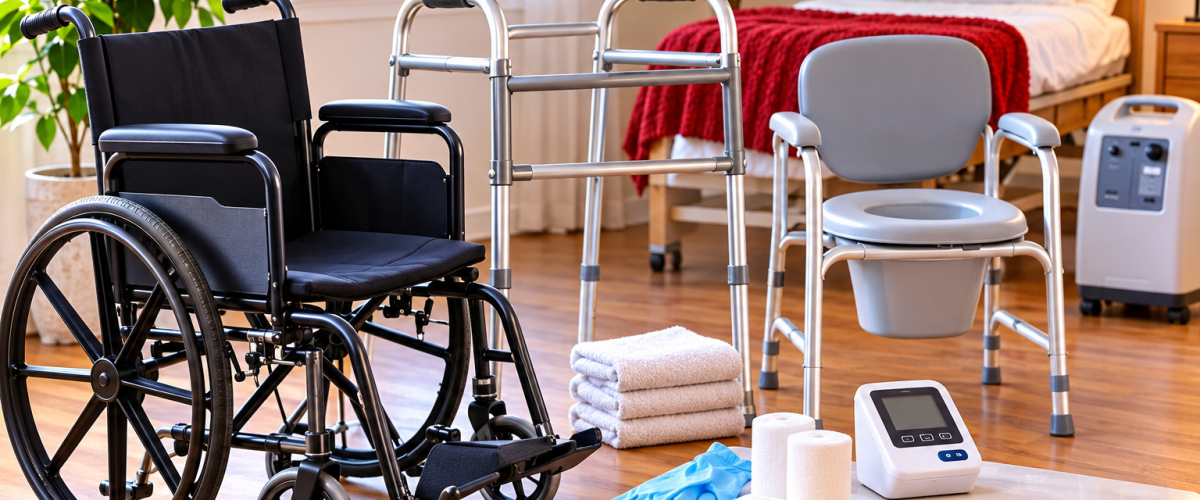
If you are looking for medical supplies Plymouth Massachusetts, start by identifying the exact product you need, checking whether it must be recommended or prescribed by a healthcare professional, and confirming that the supplier can provide the correct model and support. Medical supplies range from everyday protective products and wound care essentials to walkers, wheelchairs, hospital beds and other durable medical equipment.
At JFB Distributors and Delivery Services, we offer an online catalogue of medical products and state that customers may request delivery. Plymouth residents can contact us to ask whether a particular item is available and whether delivery can be arranged to their address.
The right choice depends on the person using the product, the home environment, the advice of the care team, the product specifications and the total cost. This guide explains what to consider before ordering, how to compare suppliers and what Plymouth area residents should verify when arranging medical supplies.
This guide is intended for Plymouth residents, family caregivers, people preparing for recovery at home, older adults, home care professionals and healthcare organizations that need to source medical products. It is also useful for someone helping a relative after surgery or a change in mobility. The information is general and does not replace an assessment or recommendation from a clinician, pharmacist, therapist or other qualified professional.
Medical supplies is a broad everyday term. It can describe disposable products used in routine care, equipment that supports mobility, devices used to monitor or manage a health condition, and larger items intended for repeated use at home. The category is not one uniform product group. A pair of examination gloves and a powered mobility device have very different purposes, risks, purchase requirements and maintenance needs.
Durable medical equipment, commonly called DME, is a more specific category used in Medicare rules. CMS explains that qualifying DME must meet several conditions, including being reusable, serving a medical purpose, generally not being useful to someone who is not ill or injured, and being appropriate for use in the home. Examples include hospital beds and wheelchairs. Not every item sold by a medical supply retailer qualifies as DME for insurance purposes.
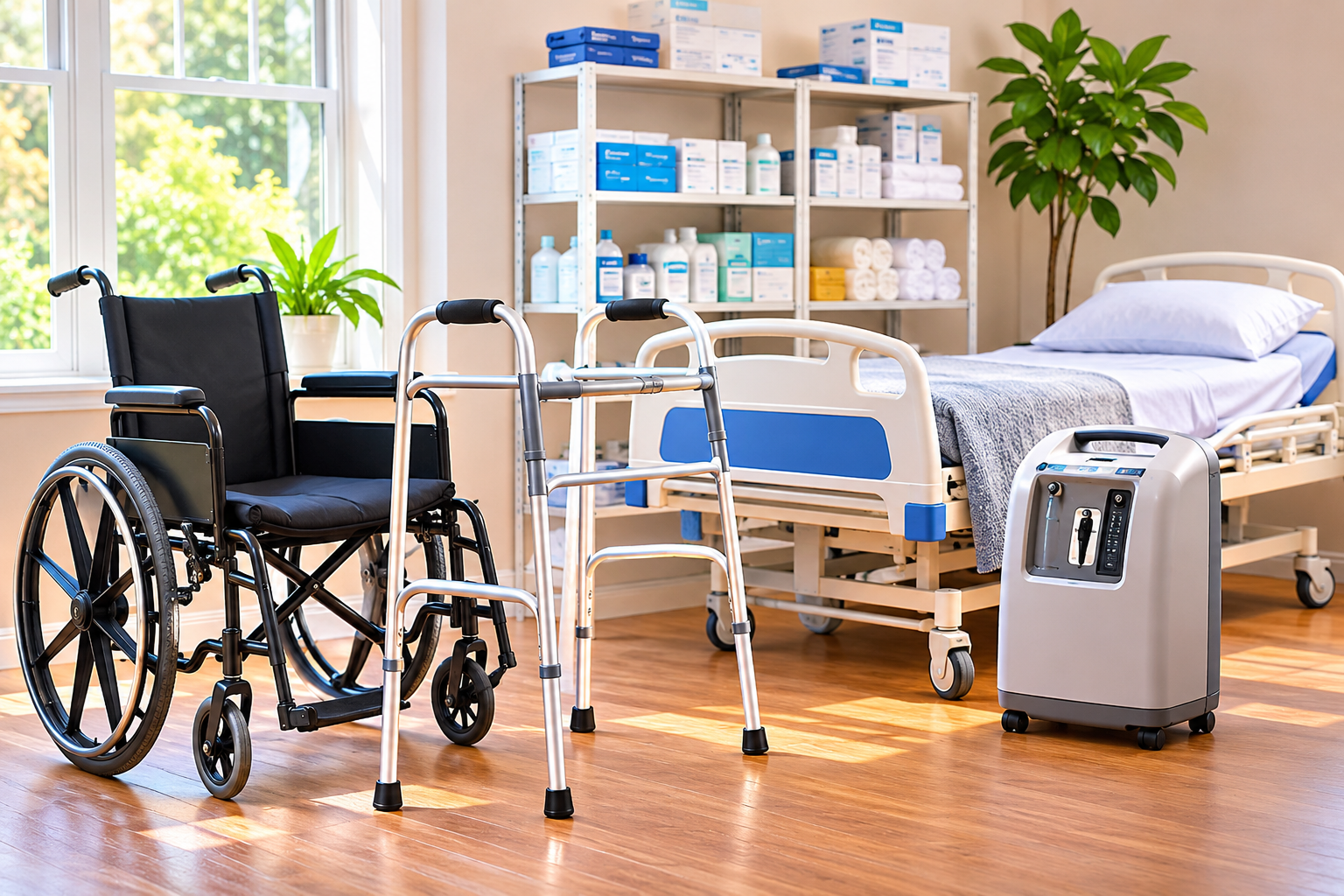
Mobility products can include canes, standard walkers, rolling walkers, transport chairs, manual wheelchairs and powered mobility devices. The best option depends on balance, strength, endurance, coordination, ability to use hand brakes, and the distance the person needs to travel. A walker that is too tall or too short can make movement less comfortable and may affect safety. A physical therapist or other qualified clinician can help assess fit and technique.
Before ordering, confirm the user’s height range, handle adjustment, seat height if applicable, folded dimensions, wheel configuration, brake design and weight capacity. Ask whether assembly is required and whether the user can safely fold, lift or transport the product.
Home care beds and support surfaces may help people who have difficulty getting in and out of a standard bed or who need a particular care setup. Product categories include adjustable beds, hospital beds, therapeutic mattresses, pressure redistribution surfaces and bed accessories. These products are not interchangeable. The right selection may depend on a clinician’s assessment, the user’s mobility, transfer needs, skin condition, caregiver capacity and room dimensions.
Measure the available space before ordering. Consider doorway width, turning space, outlet location, floor clearance and access for caregivers. Ask whether the bed requires special electrical arrangements, how it is assembled, what the mattress includes and how the equipment is cleaned and maintained.
Depending on the care plan, routine supplies may include gloves, dressings, gauze, adhesive products, cleansing materials and protective items. Wound care is not a one size fits all task. The type of dressing and how often it is changed should follow the instructions of the treating professional. If a wound becomes increasingly painful, red, swollen, warm, has a concerning odor or produces unusual drainage, contact a healthcare professional promptly. Seek urgent care for severe or rapidly worsening symptoms.
For infection prevention, choose products appropriate to the task and follow label directions. Gloves do not replace hand hygiene. Do not reuse disposable items unless the manufacturer specifically says they are reusable.
Incontinence products may include briefs, protective underwear, pads, underpads, wipes and skin care products. Fit, absorbency, comfort, ease of changing and skin sensitivity all matter. A product that is too small may leak or irritate skin, while one that is too large may shift. Caregivers should consider the person’s mobility and whether the product can be changed safely and respectfully.
If incontinence is new, changes suddenly or occurs with pain, fever, blood, confusion or other concerning symptoms, seek clinical advice rather than relying only on a product change.
Healthcare providers, caregivers and home users may need gloves, masks, protective apparel, sanitizing products and other routine supplies. Confirm the product’s intended use, size, material, packaging quantity and relevant labeling. For products used in a clinical environment, follow the organization’s infection prevention and procurement standards.
Some suppliers list nebulizers, oxygen related products, blood pressure monitors, thermometers and other devices. These products differ in how they are used and whether they require a prescription, training or ongoing maintenance. A device should be selected for the person’s clinical needs, not simply because it appears in an online catalogue. Follow the manufacturer’s instructions and the treating clinician’s guidance.
A reliable purchase begins with a clear description of the need. Before contacting a supplier, write down the product name if known, the intended user, any clinician recommendation, the required size or measurements, the quantity and the date by which the product is needed. If you do not know the correct product name, describe the task the item must support and ask what information the supplier needs to identify suitable options.
A useful supplier conversation should leave you with clear answers. Ask whether the exact model is available, whether a comparable model has different features, what is included in the price and whether accessories must be purchased separately. For equipment that supports mobility or transfers, ask whether professional fitting or instruction is recommended. For powered products, ask about charging, battery care, service arrangements and what to do if the device stops working.
Also ask whether the supplier bills insurance, participates with the specific plan, accepts assignment when relevant, and can explain the documentation needed. Do not rely on a general statement such as “we take Medicare.” Confirm the specific product and plan before placing an order.
Medicare coverage is not automatic simply because an item is described as medical equipment. Medicare Part B may cover certain medically necessary durable medical equipment for use in the home when applicable requirements are met. The prescribing or treating professional, the type of equipment, documentation, supplier enrollment and the beneficiary’s coverage arrangement can all affect payment.
CMS describes DME as equipment that meets specific criteria, including repeated use and suitability for home use. Medicare.gov explains that eligible people may have coverage for certain equipment such as hospital beds when prescribed for use in the home. Depending on the item, the rules may require purchase or rental. Costs and beneficiary responsibilities vary.
People enrolled in Medicare Advantage plans should check their plan’s network and authorization rules. Those rules may differ from Original Medicare. For Original Medicare, use Medicare’s official supplier directory and verify the specific supplier and product. A directory listing can help identify suppliers, but it does not guarantee that a product is covered in an individual case.
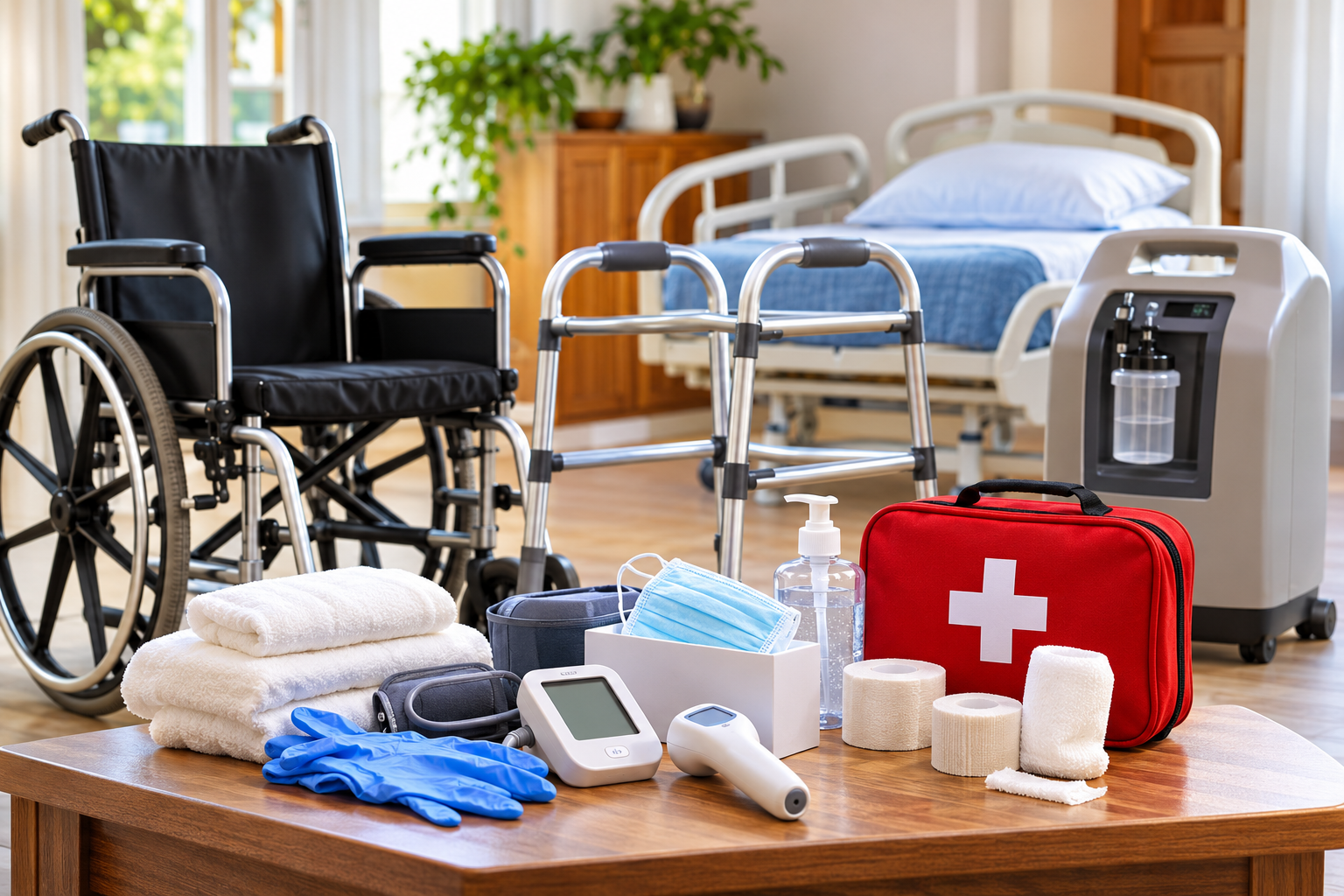
Plymouth has a mix of healthcare, retail pharmacy and specialist medical equipment listings. Local directories identify several businesses and providers in the area, but directory categories can include different kinds of organizations. A pharmacy may stock selected over the counter health products without carrying larger durable equipment. A specialist equipment provider may focus on mobility or home care products. A supplier’s listing alone does not confirm stock, insurance participation or suitability.
The Town of Plymouth provides local context that is relevant to residents and caregivers. The town’s Health and Human Services department includes a Center for Active Living, Public Health Division and Veterans Services. The Center for Active Living serves Plymouth residents aged 60 and older and provides programs and connections to support services. These municipal services are not medical supply retailers, but they can be useful community information points for older residents and families navigating local resources.
The U.S. Census Bureau’s 2025 estimate places Plymouth’s population at 67,846, with 25.2 percent of residents aged 65 and older. This is useful context for understanding why accessible home care information may matter locally. It does not establish demand for a particular product or predict an individual’s medical needs.
JFB Distributors and Delivery Services is a Massachusetts medical supply business with an online product catalogue. Its website describes serving healthcare facilities, pharmacies and people who need medical products. The catalogue includes examples such as walkers, wheelchairs, mobility scooters, beds, mattresses, gloves and personal care products. Product availability, specifications and prices should be checked on the live product page before purchase.
The company’s services page says customers may request delivery to their doorsteps. The public page does not list a confirmed Plymouth delivery schedule, delivery fee, minimum order or service boundary. If you live in Plymouth, contact JFB directly with your ZIP code and the item you need. Ask the representative to confirm whether delivery is available, when it can be completed and whether any setup service is included.
JFB Distributors and Delivery Services
Telephone: 617 502 0784
Email: jfbdistributors@outlook.com
Address listed on contact page: 853 Main St, Suite 205, Tewksbury, Massachusetts 01876
Contact page: https://jfbdistributors.com/contact-us/
Local pickup can be useful when a product is needed quickly and the item is small enough to transport safely. Before travelling, call the provider to confirm stock, store hours, product dimensions and whether the item is available for immediate purchase. For bulky equipment, confirm whether it can fit in the vehicle and whether assistance is available for loading.
Delivery may be more practical for beds, wheelchairs, mattresses and larger equipment. Confirm the delivery window, charges, whether the product will be brought inside, and whether setup or assembly is included. A delivery request does not necessarily mean installation or clinical fitting.
Online ordering can make it easier to compare specifications and prices, but product photos and short descriptions may not answer every important question. Read the complete product information, check the seller’s return policy and contact the supplier if a measurement, feature or compatibility detail is unclear.
There is no single reliable price for medical supplies because costs vary widely by product type, model, size, features, manufacturer, quantity and supplier. Disposable items may be sold in packs, while durable equipment may involve a larger one time purchase, rental arrangement or insurance claim. A lower initial price is not always the lowest total cost if accessories, delivery, maintenance or replacement parts are needed.
Compare the full cost rather than the headline price. Ask whether batteries, cushions, mattresses, chargers, replacement filters, installation or other accessories are included. Check whether the product has a warranty and whether repairs are available. For recurring supplies, compare the quantity per package and the expected rate of use.
The safest product is not necessarily the most expensive or the one with the most features. It is the product that meets the user’s actual needs, is suitable for the intended setting and can be used as directed. Read the instructions before first use. Check weight limits and compatibility. Do not modify equipment or use accessories that the manufacturer has not approved.
The Food and Drug Administration regulates medical devices in the United States, but it does not recommend a particular device for every person or setting. The FDA advises users to review a device’s instructions for use when deciding whether it is suitable for home use. Ask a clinician if you are unsure how a device should be used or whether it is appropriate.
For mobility products, check that brakes engage, wheels move freely and adjustable parts lock securely. For beds and powered equipment, inspect electrical cords and follow the manufacturer’s safety instructions. Keep pathways clear, use equipment on suitable surfaces and obtain training when needed. Stop using a product and contact the supplier or manufacturer if it appears damaged or behaves unexpectedly.
Plymouth has medical equipment providers, pharmacies and other retailers listed in local directories. The products and services vary, so call ahead to confirm the exact item, size, stock and price. You can also contact JFB Distributors and ask whether the product you need is available and whether delivery to your Plymouth address can be arranged.
JFB Distributors states on its services page that customers may request delivery to their doorsteps. Its public page does not specify Plymouth coverage or delivery terms. Contact the company at 617 502 0784 or jfbdistributors@outlook.com and provide your ZIP code and product details to confirm.
The online catalogue displays examples such as walkers, wheelchairs, mobility scooters, beds, mattresses, gloves and personal care products. The catalogue may change, so check the current listing or contact the company for availability and specifications.
Medicare may cover certain medically necessary durable medical equipment when coverage requirements are met. Not every medical supply is covered. The item, medical documentation, supplier status and plan rules matter. Check with the clinician, insurer and supplier before ordering.
Some products can be purchased directly, while certain durable medical equipment or insurance claims may require a written order or prescription. Requirements depend on the product and coverage rules. Ask the clinician and supplier before purchase.
Check the user’s measurements, weight capacity, mobility needs, indoor and outdoor use, doorway width, turning space, folding needs and ability to operate brakes. A clinician or rehabilitation professional can help determine the appropriate type and fit.
Yes, many suppliers provide online catalogues and ordering. Review the product specifications, instructions, seller contact information, delivery terms, warranty and return policy. Ask questions before ordering if the product is used for a specific medical need.
Compare the same or equivalent model and include accessories, shipping, delivery, setup, maintenance and warranty. For recurring supplies, compare package size and unit cost. If using insurance, compare the expected out of pocket amount rather than the retail price alone.
No. Pharmacies may stock selected health and personal care products, while durable medical equipment suppliers focus on items such as wheelchairs, beds and other equipment. Some businesses provide both, but the product range varies. Confirm directly.
The Town of Plymouth Centre for Active Living serves residents aged 60 and older and provides activities and connections to support resources. The town lists the Centre at 44 Nook Road, Plymouth, MA 02360, telephone 508 830 4230. It is a municipal resource, not a medical equipment supplier.
Describe the problem to the treating clinician, who can recommend the appropriate category and specifications. For equipment involving mobility, transfers, breathing or wound care, professional guidance is especially important. Then ask the supplier to confirm that the exact product matches the recommendation.
Finding the right medical supplies in Plymouth starts with a clear understanding of the user’s needs and a careful check of product fit, availability, delivery and payment. Compare suppliers on the exact item and the support they can confirm, not on broad claims. If you are considering JFB Distributors, visit the online catalogue or contact the team with the product name, quantity and Plymouth ZIP code. Ask for current availability, full cost and delivery details before placing an order.
Contact JFB Distributors and Delivery Services at 617 502 0784 or jfbdistributors@outlook.com. You can also use the official contact page at https://jfbdistributors.com/contact-us/.