If you are searching for medical supplies in Boston, Massachusetts, start by identifying the exact item you need, checking whether it requires a prescription or clinical assessment, and confirming that the supplier can deliver to your address. JFB Distributors and Delivery Services is a Massachusetts based online supplier with a product catalogue that includes mobility equipment, beds and mattresses, gloves, incontinence care products and other medical supplies. Its published business address is in Tewksbury, not Boston.
JFB says customers may request delivery, but its public services page does not specify whether every Boston neighborhood is within its delivery area. Contact the company to confirm Boston availability, product details, price, delivery timing and any documentation needed before ordering.
This guide explains what to look for when buying medical supplies in Boston, how to compare products, what to ask about insurance, and how to contact JFB Distributors. It also answers common local search questions in clear language so residents and caregivers can make a more informed next move.
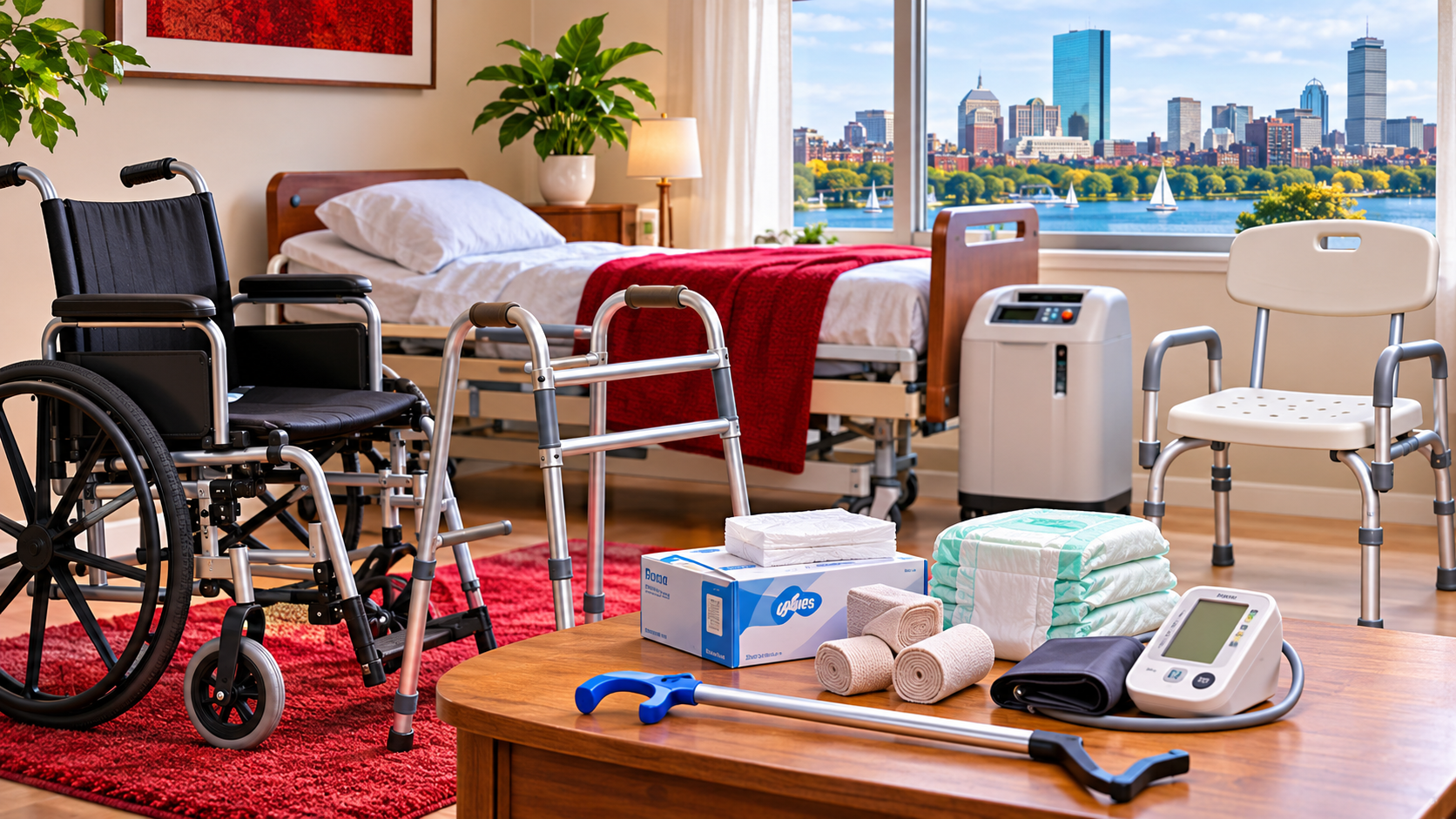
Boston area residents can compare local medical supply providers, specialist durable medical equipment suppliers and online suppliers serving Massachusetts. JFB Distributors lists products through its online catalogue and provides a delivery service that customers can request. Because its published address is 853 Main Street, Suite 205, Tewksbury, MA 01876, Boston customers should confirm delivery eligibility directly rather than assume that the company has a Boston retail shop or serves every Boston ZIP code.
To contact JFB, call 617 502 0784, email jfbdistributors@outlook.com, or use the contact form at https://jfbdistributors.com/contact-us/.
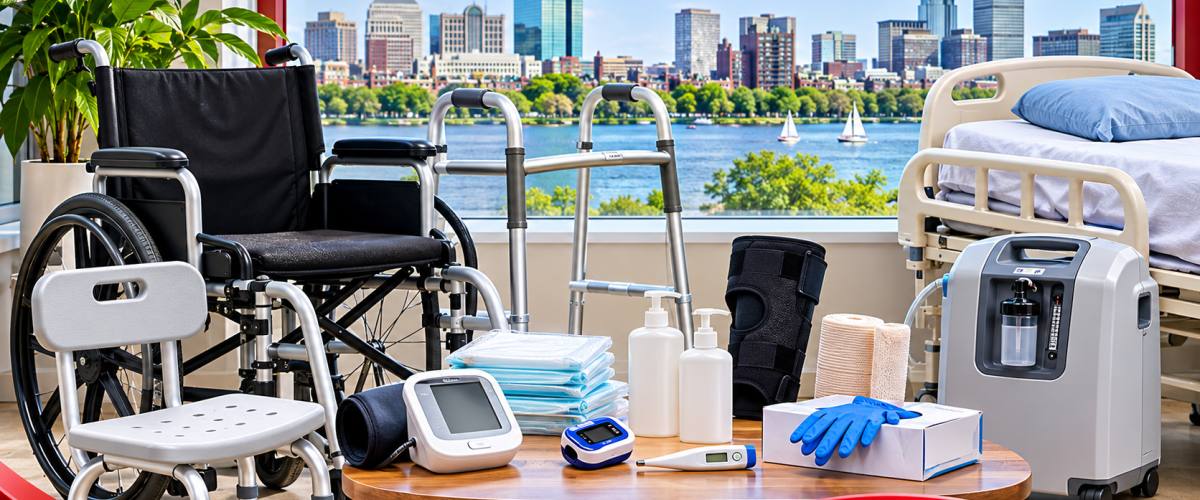
Medical supplies is a broad phrase. It can refer to disposable products used in care, reusable equipment that supports daily activities, or devices used to monitor or manage a health condition. The distinction matters because the product type can affect how it is selected, prescribed, paid for and maintained.
Massachusetts regulations describe medical supplies for home use as consumable or disposable supplies or devices needed to treat a particular illness, injury, disease or disability. Durable medical equipment, commonly called DME, is different: it is designed for repeated use and may include items such as wheelchairs, walkers, hospital beds and other equipment used at home. Medicare has its own definition and coverage criteria for durable medical equipment. A product being sold as a medical item does not automatically mean Medicare or MassHealth will pay for it.
Canes, walkers, rollators, wheelchairs and scooters can help people move through the home and community. The right choice depends on balance, strength, posture, environment, transport needs and the user’s ability to operate the equipment safely. A walker that fits a wide hallway may not fit a narrow bathroom. A wheelchair suitable for short indoor distances may not meet the needs of someone who travels outdoors frequently.
Before ordering, confirm the user’s height, the equipment’s weight capacity, seat width, turning space, brake design, foldability and whether professional fitting is recommended. For powered mobility devices, ask about battery range, charging, transport and service support.
Adjustable beds, therapeutic mattresses and pressure management surfaces may be considered when a person has mobility limitations, spends extended periods in bed or needs assistance with transfers and positioning. The product must match the individual’s care plan and the room in which it will be used. Check mattress dimensions, bed compatibility, rail compatibility, electrical requirements, weight limits and the space needed for caregivers to work safely.
Do not choose a pressure management surface solely by reading a product description. A clinician or qualified equipment professional can help determine whether a particular surface is appropriate for the person’s skin integrity, mobility and care needs.
Incontinence care may involve disposable briefs, pads, wipes, washcloths, underpads and skin care products. Selection is personal and practical. Consider fit, absorbency, skin sensitivity, packaging quantity, ease of changing and disposal. If irritation, wounds or persistent skin problems occur, seek advice from a healthcare professional rather than relying only on a product change.
JFB’s public catalogue lists adult incontinence washcloths or wipes. Customers should confirm the exact product size, pack quantity and current availability on the product page.
Gloves and hand hygiene products are used in many care settings, but they are not substitutes for hand hygiene or appropriate infection prevention procedures. Check the glove material, size, intended use, quantity and any relevant product labeling. People with latex sensitivity should ask about suitable alternatives. Care facilities should follow their own infection prevention policies and applicable workplace requirements.
JFB’s online catalogue includes vinyl exam gloves and hand sanitizer listings. Verify the current product description and intended use before ordering.
Nebulizers, blood pressure monitors, thermometers, glucose monitoring supplies and other diagnostic or respiratory products have different selection and use requirements. A device should be appropriate for the person and the intended measurement or treatment. Confirm the model, accessories, consumables, instructions, cleaning requirements and whether a prescription is required.
JFB’s featured product listings include a pediatric compressor nebulizer. Availability, age suitability, accessories and clinical instructions should be confirmed with the supplier and the prescribing clinician. Never change a prescribed respiratory treatment based only on an online product listing.
The best supplier for a particular purchase is the one that can provide the right product, accurate information, transparent costs and suitable support for the customer’s situation. A nearby storefront can be convenient for fitting or urgent collection. An online supplier may offer a broader catalogue or delivery option. A specialist provider may be more appropriate for complex respiratory, mobility or rehabilitation equipment.
JFB Distributors and Delivery Services is a Massachusetts based supplier whose website presents an online product catalogue and a delivery service. The company describes its customers as including healthcare facilities and pharmacies, and its website invites people to contact the business about particular products and supplies. Its catalogue includes a range of home and care related products, including mobility equipment, beds, mattresses, gloves and personal care items.
The important local detail is that JFB’s contact page lists 853 Main Street, Suite 205, Tewksbury, Massachusetts 01876. That is the published contact address. The website’s services page says customers may request delivery to their doorsteps, but does not publish a definitive list of Boston neighborhoods or ZIP codes served. Therefore, this article does not claim that JFB has a Boston storefront or guaranteed delivery across Boston. Customers should provide their full delivery ZIP code and ask the company to confirm availability, delivery charges and timing.
The online catalogue reviewed for this article displays multiple product categories and individual listings. Examples visible at the time of research include a four wheel electric scooter, abdominal binders, adhesive strips, folding walkers, bariatric beds and mattresses, commodes, wheelchairs, exam gloves, incontinence washcloths and wipes, and a pediatric compressor nebulizer. The product catalogue changes, so the live listing should be treated as the source of current availability and pricing.
A product listing is not a clinical recommendation. A person choosing a walker, bed, mattress, commode, scooter or respiratory device should compare specifications and seek professional guidance when the product relates to a medical condition, fall risk, skin integrity, breathing or safe transfers.
A clear enquiry helps the supplier check the correct product and delivery details. Before contacting JFB, gather the product name or category, model if known, quantity, required size, delivery ZIP code and any relevant prescription or insurance information. Do not email sensitive medical records unless the company provides a suitable secure method and explains what is required.
Delivery is not simply a matter of whether a supplier ships to Massachusetts. A customer should confirm that the supplier delivers the specific item to the exact address, that the delivery method suits the product and that someone can receive it. A compact box of disposable supplies has different delivery requirements from a hospital bed, power wheelchair or other large equipment.
Boston residents should share the ZIP code and ask whether the supplier delivers to the building entrance, unit door or a designated receiving area. For large equipment, ask whether stairs, elevators, narrow hallways, parking restrictions or appointment windows affect delivery. Confirm whether assembly, installation, demonstration or removal of packaging is included. Do not assume these services are part of standard delivery.
If a product is needed urgently after a hospital discharge, tell the supplier the required date and ask whether the item can realistically arrive in time. Also ask the discharge planner or clinician whether a temporary loan option is available. Do not rely on an unconfirmed delivery estimate for essential equipment.
Sometimes, but coverage is specific to the product, the person’s plan and the circumstances. A plan may cover one medically necessary item while excluding another, limiting quantity or requiring prior authorization. A supplier’s ability to sell an item does not establish that the item is covered.
MassHealth publishes rules for durable medical equipment services and guidance for members. Its member guidance explains that a medical provider may recommend or order equipment, and a supplier may need a prescription or letter of medical necessity. Some items require prior authorization. MassHealth coverage includes categories such as mobility equipment, hospital beds and accessories, diabetic supplies, ostomy supplies, bath and toilet equipment, patient lifts and other medically necessary items, subject to program rules.
Members should check the current MassHealth information for the exact item and their coverage circumstances. Ask the supplier whether it participates in MassHealth for that item, whether prior authorization is needed and what documentation must be submitted. A clinician’s order does not automatically mean that the item is approved or payable.
Medicare Part B may cover qualifying durable medical equipment when coverage criteria are met. CMS describes DME as equipment that meets specific conditions, including repeated use, a medical purpose, suitability for use in the home and other criteria. The item must also meet Medicare’s coverage requirements, and the supplier must satisfy applicable program requirements.
For suppliers receiving Medicare reimbursement for DMEPOS, CMS requires enrollment and accreditation, with certain exceptions and additional requirements. Customers should use Medicare resources to check supplier participation and confirm coverage for the exact item. Do not assume every online medical supply store can bill Medicare.
Private health plans differ. Call the member services number on the insurance card and ask whether the exact item is covered, whether a prescription is required, whether a specific network supplier must be used, and whether prior authorization or a clinical assessment is necessary. Ask for the answer in writing when the cost is substantial.
If paying out of pocket, compare the complete cost rather than the headline price. Consider product quality, suitability, delivery, warranty, maintenance, return restrictions and replacement consumables. A lower initial price may not represent better value if the item is unsuitable or difficult to service.
Buying new is not the only possible route. Massachusetts lists device loan and reuse resources, including programs that help eligible residents borrow or obtain gently used assistive technology and durable medical equipment. REquipment is one state listed resource for no cost, gently used equipment, subject to inventory and program requirements. Other programs may serve specific conditions, geographic areas or eligibility groups.
Before accepting used equipment, check its condition, cleaning history, recalls, missing parts, safe operation and whether the item can be adjusted to the user. Some products, such as items intended for single person use or products with hygiene and infection control concerns, may not be appropriate to reuse. Ask a qualified professional if unsure.
Boston homes and buildings vary considerably. A product that works well in a suburban home may be difficult to use in a compact apartment, older building or shared entrance. Measure the space before ordering large equipment. For mobility products, measure doorways, hallways, bathroom access, turning areas and elevator dimensions. For beds, check room layout, outlet access and caregiver access on both sides where needed.
Think about how the equipment will be transported. A folding walker may fit in a car trunk, while a powered scooter may require a lift or accessible vehicle. If a caregiver will assist with transfers, the product should be suitable for both the user and the caregiver’s safe working space.
For Boston residents living in a multi unit building, clarify delivery access and building policies. Confirm whether the delivery team can enter the building, whether a service elevator must be reserved and whether the item can pass through the unit door. These practical details can prevent a failed delivery or a product that cannot be positioned safely.
Disposable supplies are generally used once or over a short period and then replaced. Examples include gloves, wipes, underpads and certain wound care products. Durable equipment is designed for repeated use and may require fitting, cleaning, maintenance or repair. This distinction affects the buying decision. A household may need a recurring supply plan for disposable items, while a durable item may require a one time purchase, rental arrangement or insurance authorization. Ask the supplier whether the product is intended for single person use, whether it can be reused, and how it should be cleaned or stored.
For recurring supplies, check the quantity per package, the number of packages needed each month, storage space and reorder timing. A lower price per package is not necessarily better if the product is unsuitable or expires before it can be used. For equipment, focus on fit, durability, safe operation, compatibility and the availability of replacement parts. Keep the product instructions and order details so caregivers can identify the exact model when requesting support.
Family caregivers often manage several tasks at once: arranging appointments, preparing the home, coordinating with clinicians and keeping supplies available. A written list can reduce confusion. Record the item, size, model, quantity, reorder point, supplier contact and any special instructions. If more than one person helps with care, make sure everyone knows where supplies are stored and which products are intended for the individual.
When buying for another adult, involve that person in the decision whenever possible. Consider comfort, privacy, ease of use and personal preferences. For mobility equipment, the user should be able to operate the brakes and controls safely. For bathroom equipment, consider the layout, floor surface and whether assistance is required. For beds and transfer equipment, ask the clinician or therapist to assess the safest arrangement.
If a person is returning home from a hospital or rehabilitation setting, ask the discharge team for a written equipment list and clarify which items are essential before arrival. Confirm whether the equipment is already arranged, whether the supplier has received the order and whether insurance approval is pending. Do not assume that a referral means an order has been accepted or that the item will arrive on a particular date.
Healthcare organizations may have different purchasing needs from individual households. A clinic or pharmacy may require repeat ordering, consistent product specifications, predictable fulfilment, invoices and clear communication about substitutions. Before opening a supplier relationship, identify the products and quantities required, acceptable brands or specifications, delivery receiving hours and the person authorized to approve purchases.
For regulated or clinically important products, purchasing staff should confirm product labeling, manufacturer information, lot or expiry information where applicable, storage requirements and internal approval procedures. Organizations should also confirm whether the supplier can meet their documentation and invoicing requirements. JFB describes its customer base as including healthcare facilities and pharmacies, but organizations should discuss specific account arrangements directly rather than assume a particular contract, discount or fulfilment commitment.
Read the manufacturer instructions before using any medical device. Check whether the product requires assembly, calibration, charging, cleaning or routine inspection. Keep cords away from walkways, place equipment on a stable surface and follow the manufacturer’s limits for weight, temperature and use. Do not modify a device or use accessories that the manufacturer has not approved.
Cleaning instructions vary by product and material. Some items can be cleaned with common products, while others require specific methods or should not be immersed. Follow the product instructions and the care organization’s infection prevention policy. Do not share personal care items that are intended for one person. Dispose of used supplies according to the instructions and applicable local requirements.
Store disposable supplies in a clean, dry place and keep packaging intact until use. Check expiration dates when the product has one. Avoid placing supplies near heat, moisture, chemicals or direct sunlight if the manufacturer advises against it. Rotate stock so older suitable items are used first, and keep an eye on low inventory before a critical supply runs out.
A home supply list should be based on the individual’s care plan, not a generic shopping checklist. Start with the clinician’s recommendations, then identify the exact product, size and expected usage. Separate recurring disposable items from equipment that is purchased less often. Include a note about who will reorder each item and how much lead time is needed.
For a person using mobility equipment, the list may include the primary device, any approved accessories and maintenance information. For personal care, it may include the preferred product type, size and skin care instructions. For monitoring devices, include compatible test strips, cuffs, sensors or other consumables if the manufacturer requires them. Verify compatibility before purchasing replacement supplies.
Keep the list accessible to the person receiving care and the people who support them. Review it when the care plan changes, the user’s mobility changes, a product causes discomfort or the household changes suppliers. A short review can prevent duplicate purchases and help identify when a professional reassessment is needed.
Where can I buy medical supplies in Boston, MA?
Boston residents can compare local medical supply stores, specialist equipment providers and online suppliers that confirm delivery to their address. JFB Distributors has an online catalogue and invites customers to contact the company about products and delivery. Its listed address is in Tewksbury, so confirm Boston delivery before ordering.
Does JFB Distributors deliver medical supplies to Boston?
JFB’s services page says customers may request delivery to their doorsteps. It does not publish a confirmed Boston service area. Call 617 502 0784 or use the contact form with your Boston ZIP code to confirm delivery for the product you need.
Where is JFB Distributors located?
The official contact page lists 853 Main Street, Suite 205, Tewksbury, Massachusetts 01876. This is the published contact address, not a Boston storefront address.
What medical supplies does JFB Distributors sell?
Its online catalogue displays products such as mobility aids, scooters, walkers, beds, mattresses, commodes, gloves, incontinence washcloths and wipes, and a pediatric compressor nebulizer. Check the live catalogue for current products, models and stock.
Can I order a wheelchair or walker online?
You may be able to order these products online, but first confirm the correct size, weight capacity, fit, intended environment, accessories and delivery requirements. A clinician or equipment professional can help with complex mobility needs.
Does MassHealth pay for medical supplies?
MassHealth may cover medically necessary durable medical equipment and certain medical supplies when program requirements are met. A prescription or letter of medical necessity may be required, and some items need prior authorization. Check the current rules for the exact item.
Does Medicare cover medical equipment?
Medicare Part B may cover qualifying durable medical equipment when coverage conditions are satisfied and the supplier meets applicable requirements. Coverage is not automatic for every product sold as a medical supply.
Can I get medical supplies delivered to my Boston apartment?
Possibly, depending on the supplier, item, ZIP code and building access. Confirm whether delivery is to the building entrance or unit door, and ask about stairs, elevators, assembly and additional charges.
What should I ask before buying a hospital bed?
Ask about dimensions, height range, weight capacity, mattress compatibility, rails, electrical requirements, delivery, assembly, warranty, service and whether the bed matches the care plan. Have the room measured before ordering.
Where can I find low cost or loaner medical equipment in Massachusetts?
Massachusetts publishes device loan and reuse resources. REquipment and other listed programs may offer gently used equipment or loans, subject to eligibility and available inventory.
How do I contact JFB Distributors?
Call 617 502 0784, email jfbdistributors@outlook.com or submit the contact form at https://jfbdistributors.com/contact-us/. The contact page lists the company address in Tewksbury, Massachusetts.
Can I use this article as medical advice?
No. This guide is general purchasing information, not diagnosis or treatment advice. Ask a licensed healthcare professional to recommend or assess equipment for an individual medical need.
If you have identified a product and want to confirm whether it is suitable for your needs, contact JFB Distributors directly. Share the product name, model or category, quantity and delivery ZIP code. Ask the company to confirm current availability, total price, delivery eligibility, estimated timing and any documentation needed.
Phone: 617 502 0784
Email: jfbdistributors@outlook.com
Address: 853 Main Street, Suite 205, Tewksbury, Massachusetts 01876
Contact form: https://jfbdistributors.com/contact-us/
Product catalogue: https://jfbdistributors.com/products/
Services information: https://jfbdistributors.com/services/
A practical next step is to contact JFB with your Boston ZIP code and the exact supply you are looking for. That allows the team to confirm whether the product is available and whether delivery can be arranged for your address.
Finding medical supplies in Boston, MA starts with understanding the user’s needs and confirming that the product, supplier and delivery arrangement are appropriate. Compare specifications, ask about insurance and documentation, and seek clinical guidance for complex equipment. JFB Distributors offers an online catalogue and a delivery enquiry route, with its published contact address in Tewksbury. Boston customers should confirm service availability directly before ordering. Clear questions about fit, stock, price and delivery help make the purchasing process safer and more predictable.