In the scenic Berkshire County community of Alford, Massachusetts, residents may need dependable access to medical supplies for home care, recovery, mobility support, and everyday healthcare needs. If you are searching for Medical Supplies Alford MA, JFB Distributors and Delivery Services is ready to help you find the medical products you need. We supply healthcare facilities, pharmacies, and individuals with a range of medical supply solutions. Alford residents can explore our online product catalog and contact our team directly to check product availability, discuss specific requirements, and confirm delivery options to their location.
Contact JFB Distributors at 617-502-0784 or jfbdistributors@outlook.com to inquire about medical supplies, pricing, and delivery to Alford, MA. Our address is 853 Main St #205, Tewksbury, MA 01876.

A medical supply need can arise gradually or with very little notice. A family may be preparing a home for an older relative, supporting someone after surgery, arranging equipment following a change in mobility, or keeping routine care products available. In each situation, the right product depends on the person’s needs, the advice of their healthcare professional, the home environment and the supplier’s ability to provide the requested item.
For people in Alford, the practical challenge may be finding a supplier that can explain product options and confirm how an order can reach a rural address. A nearby business is not automatically the best fit, and an online catalog does not guarantee that every item is in stock or that every destination is within a delivery route. The most reliable approach is to ask specific questions before purchasing.
The phrase medical supplies can refer to disposable products, monitoring devices, mobility aids, bathroom safety equipment, respiratory accessories and larger durable medical equipment. These categories have different selection, cleaning, fitting, documentation and payment considerations. A box of disposable gloves is not assessed in the same way as a hospital bed, wheelchair or oxygen-related device.
Medical supplies are products used to support treatment, monitoring, personal care, mobility or daily activities affected by an illness, injury or disability. Some are consumable or disposable, such as dressings, gloves and certain incontinence products. Others are reusable devices or equipment intended to support a medical purpose over time.
Durable medical equipment, often shortened to DME, is a specific category used in healthcare payment and regulatory contexts. The Centers for Medicare & Medicaid Services describes DME as equipment such as hospital beds and wheelchairs used in the home and outlines criteria including repeated use, medical purpose and suitability for home use. The precise coverage definition depends on the payer and program. A product being described informally as medical equipment does not by itself mean that Medicare, MassHealth or a private insurer will pay for it.
Massachusetts MassHealth materials distinguish durable medical equipment from medical supplies and list examples of items that may be covered for eligible members. Examples include walkers, canes, wheelchairs, diabetic supplies, ostomy and catheter supplies, absorbent products, hospital beds and support surfaces. Coverage depends on program rules, medical necessity, documentation and any applicable authorization.
A simple distinction is useful: consumable supplies are generally used up or replaced, while durable equipment is designed for repeated use. Some products sit near the boundary or are treated differently by different benefit programs. Ask the supplier and payer how the specific item is classified rather than relying on the product’s everyday name.
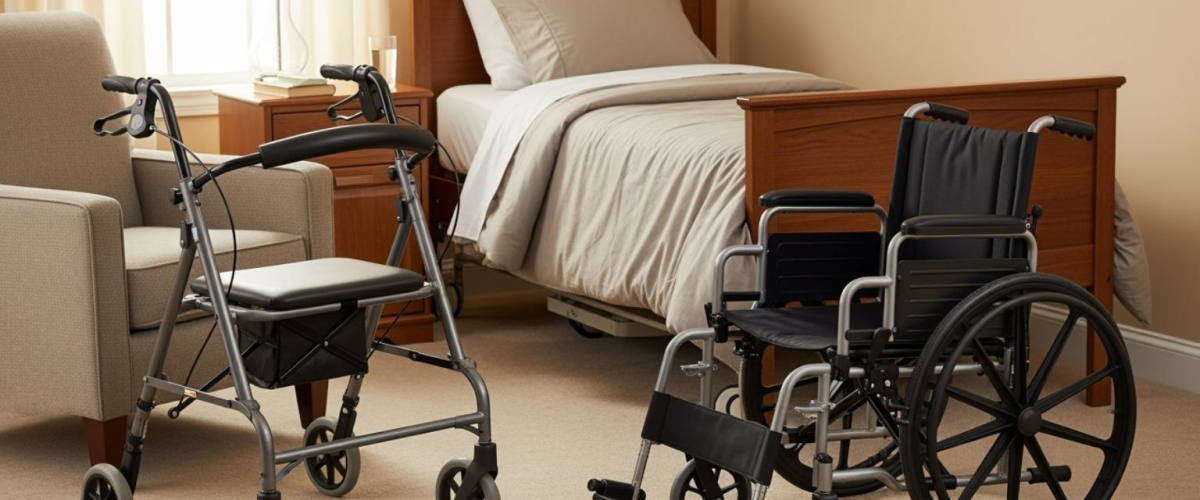
Canes, crutches, walkers, rollators and wheelchairs can help people move through the home and community when mobility is limited. Selection should account for the user’s height, balance, strength, ability to grip handles, transfer needs, weight capacity and the surfaces where the device will be used. A rollator with a seat may suit some users who need rest breaks, while another person may need a different style of walker or wheelchair.
Do not choose a mobility aid based only on appearance or price. Incorrect height, poor fit, unsuitable brakes or a device that does not match the user’s balance and strength can create fall risks. Ask a physical therapist, occupational therapist or other qualified clinician to recommend and fit equipment when the person’s needs are complex.
Bathroom equipment may include shower chairs, transfer benches, grab bars, raised toilet seats and bedside commodes. These products can support safer bathing and toileting, but the room layout and the user’s transfer ability matter. Measure available space, check the product’s weight capacity and confirm whether the surface and installation method are appropriate.
A freestanding shower chair is not a substitute for a properly installed grab bar. Suction-mounted accessories should not be assumed to provide the same support as a securely installed safety bar. If installation or transfer safety is uncertain, ask a qualified professional to assess the bathroom.
Incontinence supplies can include adult briefs, protective underwear, underpads, wipes and skin cleansing products. The most useful selection factors are the person’s size, absorbency needs, fit, skin sensitivity, mobility, frequency of changes and the quantity needed for the planned period.
A product that leaks or fits poorly can increase laundry, discomfort and skin irritation. If a person has persistent skin breakdown, pain, unusual symptoms or a sudden change in continence, contact a healthcare professional rather than trying to solve the issue only by changing products.
Depending on the care plan, households may need gauze, dressings, tape, gloves, cleansing products and other wound care items. The correct product depends on the wound and the clinician’s instructions. Not all dressings are interchangeable, and using an unsuitable product can interfere with the treatment plan.
Follow the care team’s instructions for wound cleaning, dressing changes, hand hygiene and disposal. Ask the clinician to write down the exact product type or specifications if the item is unfamiliar. A supplier can help identify a product from a clear description, but should not replace clinical assessment or prescribe a wound care regimen.
Diabetes related supplies may include glucose meters, compatible test strips, lancets, lancet devices and other monitoring accessories. Compatibility is essential: test strips are generally designed for particular meter models. Confirm the exact brand and model before ordering replacement supplies.
People using continuous glucose monitoring systems or insulin delivery devices should follow the manufacturer’s instructions and their clinician’s advice about compatible sensors, transmitters, infusion sets and replacement schedules. Coverage and prescription rules can differ by plan.
Respiratory products may include nebulizer accessories, CPAP or BiPAP masks and tubing, filters and other replacement components. The correct part depends on the device make and model. Ask the prescribing clinician or respiratory therapist which product is appropriate, and confirm compatibility before ordering.
Oxygen equipment and other respiratory devices may involve prescriptions, setup, training and specific safety precautions. Never substitute a different device or change prescribed settings without direction from the responsible healthcare professional. Confirm whether a supplier provides the required setup and support before relying on delivery alone.
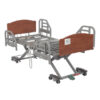
Hospital beds, bed accessories and therapeutic support surfaces may be considered when a person has significant mobility limitations, positioning needs or a care plan that requires specialized equipment. Room dimensions, doorway clearance, electrical access, caregiver workflow, bed height and transfer arrangements should be considered before ordering.
A mattress marketed as therapeutic is not automatically suitable for every patient. Ask the clinical team to specify the required features and whether the product is intended to address a particular pressure or positioning concern. Confirm delivery, assembly, service and return arrangements in advance.
The best purchasing process begins with the need, not with a product photograph. A structured approach can reduce errors, avoid incompatible purchases and make it easier for a supplier to respond accurately.
A supplier conversation is more effective when the request is specific. Instead of asking only whether a company sells medical supplies, explain what product is needed and how it will be used. This helps the representative determine whether the company can assist or whether additional information is required.
Write down the representative’s name, the date of the conversation and any quoted price or delivery estimate. If the answer depends on insurance approval or stock availability, ask for confirmation in writing. Do not treat a preliminary estimate as a final approval or guaranteed delivery date.
Alford is a small Berkshire County community in western Massachusetts. For residents arranging home medical supplies, the key local question is often not simply where a supplier is located, but whether the supplier can deliver the requested item to the specific address and whether the delivery includes the services needed.
Delivery terms can vary by product. A small package of disposable supplies may be shipped differently from a wheelchair, bed or large support surface. Some equipment may require a scheduled delivery, assembly, setup or instruction. Rural roads, seasonal weather, driveway access, stairs and building entry can affect logistics. Share relevant access information when requesting a quote.
JFB Distributors publishes a Tewksbury, Massachusetts business address and provides a contact form, phone number and email. Its About Us page describes delivery to the doorsteps of healthcare facilities and pharmacies. Those statements establish the company’s stated delivery focus, but they do not independently confirm a current delivery route, fee or service commitment for every Alford residential address. Contact JFB to verify the exact destination and product.
If a product is urgently needed, tell the supplier the required date and ask whether that timeline is realistic. For urgent medical needs, do not delay care while waiting for a retail order. Contact the treating clinician, hospital discharge team, pharmacy or emergency services as appropriate.
There is no single price for medical supplies in Alford. Costs vary with product type, brand, size, features, quantity, accessories, delivery, installation, rental terms and whether the product is purchased privately or through a benefit program. A basic disposable item and a powered mobility device have very different cost structures.
When comparing prices, compare equivalent products and complete costs. Check whether the listed price includes required accessories, batteries, cushions, tubing, filters, setup, shipping, taxes or recurring replacement items. For rental equipment, ask about the rental period, deposit, pickup fee, maintenance and what happens if the equipment is needed longer than expected.
Insurance coverage is not guaranteed by a product’s medical purpose. Medicare, MassHealth and private plans have their own definitions, supplier rules, documentation requirements and coverage limits. Some equipment may require a prescription or medical necessity documentation; some items may require prior authorization. Ask the payer whether the item and supplier are eligible before committing to a purchase.
MassHealth’s public member guidance explains that a provider may recommend or order DME, and that a DME provider may need a prescription or letter of medical necessity. It also notes that prior authorization may be required for many items. The DME provider coordinates delivery after necessary documentation or authorization is obtained. Members should check the current rules for their own benefit and item.
For Medicare, the Centers for Medicare & Medicaid Services explains the general DME criteria and related payment framework. Individual coverage depends on the Medicare benefit rules, documentation, supplier requirements and the beneficiary’s circumstances. A supplier’s willingness to sell an item does not establish Medicare coverage.
Ask for an itemized estimate that separates the product, accessories, delivery and any setup charges. If insurance is involved, ask what amount is expected to be paid by the plan and what amount may remain the customer’s responsibility. Confirm the payer’s decision directly rather than relying solely on a verbal estimate from a retailer.
A product can be well made and still be unsuitable for a particular person. Mobility equipment, respiratory devices, support surfaces and wound care products may require individualized selection. Consult the clinician responsible for the person’s care when product choice affects treatment, fall risk, skin integrity, breathing or safe transfers.
Replacement parts and consumables often depend on exact models. A CPAP mask, nebulizer component, glucose test strip or wheelchair accessory may not fit every device. Check the model number and manufacturer’s instructions before ordering.
A wheelchair that is too wide for a doorway, a commode that is too high, or a bed that cannot pass through the entrance can create avoidable problems. Measure before ordering and ask about the supplier’s return policy if fit is uncertain.
Delivery, assembly, installation, fitting and instruction are separate services. Ask exactly what the delivery team will do and whether a caregiver or clinician must be present. For devices that require training, make sure the intended user and caregiver understand the instructions before use.
Coverage depends on the payer’s rules and the person’s circumstances. Obtain confirmation of eligibility, documentation and authorization before relying on reimbursement. Keep records of approvals and supplier communications.
Read the manufacturer’s instructions and warnings. Check power requirements, cleaning procedures, maintenance, storage, weight limits and environmental restrictions. The FDA emphasizes that home use devices can present risks because the user, device and home environment interact in ways that differ from clinical settings.
If a device malfunctions, causes injury or appears unsafe, stop using it if it is safe to do so, follow the manufacturer’s instructions and contact the healthcare professional or supplier. Serious or urgent symptoms require appropriate medical care. The FDA provides information about reporting problems with regulated medical devices.
JFB Distributors and Delivery Services describes its business as providing medical supply solutions for healthcare facilities, pharmacies and people with health-related needs. Its About Us page states that the company aims to provide reliable and cost-efficient medical supplies while maintaining quality. It also describes a delivery focus for supplies ordered by clients.
The company’s published mission and vision are company statements. They should be understood as the organization’s own description of its goals, not as independent certification, a clinical endorsement or a guarantee of a particular product outcome. Customers should evaluate each item against their own requirements and confirm the service details directly.
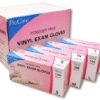
The JFB website includes an online product catalog. The product listings visible when this article was researched included examples such as vinyl gloves, adult incontinence washcloths or wipes, a pediatric compressor nebulizer, a bed and a pressure guard mattress. Catalog listings can change. The presence of a product page does not guarantee current stock, suitability for a particular patient, delivery to Alford or insurance coverage.
For Alford residents, JFB can be approached with a specific product inquiry. Provide the product name or model, quantity, intended use, any prescription or documentation requirements and the delivery ZIP code. Ask the company to confirm availability, delivery options, costs and any setup or return conditions before placing an order.
Use the company’s official contact page to ask about products, supplies, ordering and delivery. The contact page currently publishes the following information:
| Company | JFB Distributors and Delivery Services |
| Telephone | 617-502-0784 |
| Address | 853 Main St #205, Tewksbury, Massachusetts 01876 |
| jfbdistributors@outlook.com | |
| Contact page | https://jfbdistributors.com/contact-us/ |
| About Us | https://jfbdistributors.com/about-us/ |
When contacting the company, a useful message could be: “I live in Alford, Massachusetts and am looking for
. Can you confirm current availability, price, any prescription or documentation requirements, and whether delivery is available to my ZIP code? Please also let me know the estimated delivery time and any delivery, setup or return fees.”Do not send sensitive medical records or personal information through an ordinary contact form unless the company has provided an appropriate secure process and explained what information is necessary. Share only the information needed to identify the product and arrange the inquiry.
Start by identifying the exact product and contacting medical supply providers, pharmacies or other appropriate sellers. JFB Distributors is a Massachusetts supplier with an online catalog and published contact details. Contact the company to confirm whether it has the item and can deliver to your Alford address.
The official Contact page lists the company’s address as 853 Main St #205, Tewksbury, Massachusetts 01876. It does not list an Alford storefront. Confirm any in-person service arrangements directly with the company.
JFB’s About Us page describes delivery as part of its business, but the page does not specifically confirm delivery to every Alford address. Ask the company to verify your ZIP code, product, delivery date, fees and any setup requirements.
Depending on the person’s needs, home care supplies may include mobility aids, bathroom safety products, incontinence products, gloves, wound care items, diabetes supplies, respiratory accessories, beds or support surfaces. Ask the healthcare professional which products are appropriate.
Ask the supplier about the specific type, dimensions, weight capacity, availability and delivery. A clinician or rehabilitation professional can help determine the correct fit and features, especially if the user has balance, transfer or strength limitations.
Some items can be purchased over the counter, while other equipment may require a prescription, medical order or letter of medical necessity. Requirements depend on the product and payer. Confirm before ordering.
MassHealth lists examples of DME and supplies that may be covered for eligible members. Coverage is subject to medical necessity, program requirements, documentation and sometimes prior authorization. Check the current MassHealth guidance for the exact item.
Medicare coverage depends on whether the product meets the applicable benefit definition and whether all coverage, documentation and supplier requirements are met. Do not assume an item is covered simply because it is used for health care. Confirm with Medicare or the plan.
Consider fit, size, absorbency, skin sensitivity, activity level, frequency of changes and quantity. If the person has skin breakdown or a sudden change in symptoms, seek clinical advice.
Confirm the device make and model and obtain the exact compatible part information from the manufacturer or respiratory care professional. Ask the supplier to verify compatibility before purchase.
Some suppliers offer delivery, setup or installation for certain products, but these services are not automatic. Ask what is included, whether an appointment is required and whether the user or caregiver must be present.
Have the product name or model, quantity, relevant size or measurements, Alford ZIP code, required date and any prescription or insurance information available. Do not share more personal medical information than is necessary.
Call 617-502-0784, email jfbdistributors@outlook.com or use https://jfbdistributors.com/contact-us/. The published business address is 853 Main St #205, Tewksbury, MA 01876.
The schedule depends on usage, product instructions, storage conditions and the person’s care plan. Keep track of consumption and reorder before supplies run out, while avoiding excessive stock that may expire or become unsuitable.
Choosing medical supplies is about more than finding a product online. The item must match the user’s needs, fit the home, meet any clinical requirements and arrive with clear instructions and support. Alford residents should confirm product specifications, current availability, delivery terms, payment requirements and return conditions before ordering.
JFB Distributors and Delivery Services provides a Massachusetts based point of contact for medical supply inquiries. Its official website describes its medical supply mission and provides a product catalog, telephone number, email and Tewksbury address. Whether a particular item can be supplied and delivered to Alford must be confirmed directly.