
Finding the right medical supplies in Holyoke, Massachusetts is about more than locating a nearby store. The appropriate product depends on the person’s needs, the intended use, the home environment, product specifications and, in some cases, a healthcare provider’s order or an insurer’s requirements. For one household, the need may be a recurring consumable such as wound-care or diabetes supplies. For another, it may involve a walker, wheelchair, bathroom-safety device or other durable medical equipment that requires careful selection, delivery and support.
This guide gives Holyoke residents, caregivers, families, seniors, people recovering at home and healthcare-related readers a practical starting point for researching medical supplies and durable medical equipment. It explains the major product categories, the difference between everyday medical supplies and DME, how local purchasing compares with online ordering, what to ask a supplier, and how Medicare or MassHealth requirements can affect an equipment purchase.
JFB Distributors’ dedicated Holyoke service page is the requested local destination for this article. Because supplier inventory, pricing, delivery schedules, payer participation and individual product availability can change, readers should confirm those details directly with JFB before ordering. Local context can also include established Holyoke medical-supply businesses, pharmacies and healthcare organizations, each serving different needs.
The goal is not to declare one supplier universally best. A good purchasing decision depends on the exact product, the user’s circumstances, urgency, documentation, insurance or Medicare requirements, delivery needs, fitting and the level of service available after purchase.
Medical supplies in Holyoke, MA can include mobility aids, wheelchairs, walkers, bathroom-safety equipment, wound-care products, diabetes supplies, ostomy and incontinence products, braces and supports, and other durable medical equipment. Local options include specialized medical-supply businesses, pharmacies and regional providers. Product availability, pricing, prescriptions, insurance participation and delivery vary, so confirm the exact item and purchasing requirements before placing an order.
Mass Surgical Supply LLC is located at 249 High Street in Holyoke and its official website lists medical supplies, durable medical equipment, mobility aids, bathroom-safety equipment, wound-care products, diabetes-care products, ostomy supplies, incontinence products, braces and supports and other categories. The company states on its official site that it offers free delivery and no minimum charge. These are current supplier-stated services and should be confirmed for the specific order.
The term medical supplies covers many different products. Some are disposable or consumed during use, while others are reusable devices. The appropriate category depends on the healthcare need and the way the product will be used.
| Product category | Examples | What to consider |
| Mobility aids | Canes, walkers, rollators, wheelchairs | Fit, weight capacity, maneuverability and home access |
| Bathroom safety | Bath and toilet equipment, transfer aids | Space, stability, transfers and user ability |
| Wound care | Dressings, gauze, tapes and related supplies | Exact product, frequency of use and clinical guidance |
| Diabetes care | Glucose monitors, test strips, lancets | Device compatibility, quantity and coverage |
| Ostomy care | Pouches, barriers and related supplies | Type, size, skin needs and replacement schedule |
| Incontinence | Absorbent products and protective supplies | Size, absorbency, quantity and payer rules |
| Braces/supports | Orthopedic supports, compression and related products | Correct sizing and intended use |
| DME | Hospital beds, patient lifts and other reusable equipment | Medical necessity, documentation, delivery and setup |
Durable medical equipment, commonly called DME, refers to reusable equipment intended for repeated use. Medicare defines DME as equipment that is durable, used for a medical reason, generally useful to someone who is sick or injured, used in the home and expected to last at least three years. Medicare examples include canes, commode chairs, CPAP therapy, crutches, glucose monitors and related supplies, hospital beds, oxygen equipment, walkers, wheelchairs and scooters.
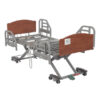
DME can be a significant purchase because the product has to work in the user’s real environment. A wheelchair must fit through relevant doorways. A hospital bed needs adequate room and access. A walker must be appropriate for the user’s height and ability. A patient lift or other complex equipment may require professional guidance, setup or training.
| DME question | Why it matters |
| Will it fit the home? | Doorways, rooms, stairs and storage areas can affect usability. |
| Does the user fit the equipment? | Height, weight capacity and physical ability matter. |
| Is documentation required? | A prescription or medical-necessity documentation may be needed. |
| Is authorization required? | Some payer programs require prior authorization. |
| Who delivers it? | Large equipment may require scheduled delivery and setup. |
| Who repairs it? | Ask about warranty service, repairs and replacement parts. |
Mobility aids can support movement and independence for people with temporary or ongoing mobility limitations. Common examples include canes, walkers, rollators and wheelchairs. The right choice depends on the user’s strength, balance, endurance, environment and intended use.
A mobility product should not be selected solely because it is inexpensive or visually appealing. Consider handle height, seat dimensions, weight capacity, brake operation, turning space, terrain and how the device will be transported. For more complex mobility needs, a clinician or qualified equipment professional can help identify appropriate features.
Mass Surgical Supply’s official Holyoke website lists mobility aids among its product categories. The supplier also lists braces and supports and other home-care products. Availability should be verified directly before visiting or ordering.
Bathroom safety equipment can help support safer bathing, toileting and transfers. Examples include bath and toilet equipment and other aids intended for daily living. The correct product depends on bathroom dimensions, the user’s transfer ability, stability, weight capacity and available support.
Before buying a shower or bathroom aid, measure the available space and consider how the user will enter, sit, stand and move around the area. For people with significant mobility or balance challenges, a healthcare professional may recommend a specific device or configuration.
Wound-care supplies can include dressings, gauze, tapes and other products used for home care. Mass Surgical Supply’s official website lists wound-care products among its categories.
Not every dressing is interchangeable. Products can differ in absorbency, adhesive properties, materials and intended use. When a clinician has recommended a specific product or type of dressing, use that guidance when selecting supplies. If a wound is changing or concerns arise, contact the appropriate healthcare professional rather than relying on a general product description.
Diabetes-care supplies may include glucose-monitoring products, test strips, lancets and other equipment. Product compatibility is important because strips and accessories may be designed for specific monitoring systems.
MassHealth maintains specific medical-necessity guidance for diabetes-management equipment such as continuous glucose monitoring systems and insulin pumps. Coverage and prior-authorization requirements can vary, so patients should verify the exact product and payer requirements rather than assuming that all diabetes supplies are covered in the same way.
Ostomy and incontinence products are often recurring supplies that require consistent sizing, product selection and replenishment. Mass Surgical Supply’s official site lists both ostomy and incontinence products.
For ostomy products, the pouching system and accessories should match the user’s specific needs and instructions. For absorbent products, size, absorbency and quantity matter. Payer rules may also establish limits or require documentation.
Braces and supports can include orthopedic supports and compression-related products. Mass Surgical Supply’s official site lists braces and supports among its product categories.
Correct sizing and intended use are important. A support that is too loose may not function as intended, while an improperly fitted compression product can create problems. When a product is being used for a specific medical condition, follow the recommendation of the appropriate healthcare professional.
Holyoke has several types of healthcare and supply resources. Specialized medical-supply companies may provide a broader range of equipment and home-care products, while pharmacies may focus primarily on prescriptions and selected medical supplies. Community health centers can provide pharmacy services and help connect patients with care.
| Local resource | Verified information | Potential use |
| Mass Surgical Supply LLC | 249 High Street, Holyoke; official site lists medical supplies, DME, mobility aids, bathroom safety, wound care, diabetes care, ostomy, incontinence and braces/supports | Specialized medical-supply and equipment resource |
| Holyoke Health Center Pharmacy | 230 Maple Street, Holyoke; official pharmacy page lists prescription delivery, curbside pickup and medication-management services | Community pharmacy and medication services |
| Retail pharmacies | Holyoke has multiple pharmacy locations listed in current pharmacy directories | Convenient access to prescriptions and selected healthcare products |
| JFB Distributors | Dedicated Holyoke service page supplied for this article | Regional/local-search option; verify exact current services and inventory directly |
A directory or pharmacy listing should not be treated as proof that a particular item is currently in stock or covered by insurance. Confirm the exact product and service before relying on the listing.
JFB Distributors has a dedicated Holyoke medical-supplies page at the URL supplied for this article: https://jfbdistributors.com/medical-supplies-holyoke-ma/. The page is the appropriate local landing page for readers searching for medical supplies associated with Holyoke.
Because the live JFB page was not reliably retrievable during this research session, this article does not invent or attribute specific JFB products, prices, hours, insurance participation or delivery commitments beyond the existence of the supplied Holyoke page. Before publication, the business owner or site manager should confirm the page’s current service claims, address, phone number, product categories and service area.
This approach supports trustworthy local SEO and GEO content: local relevance is clear, but time-sensitive business facts are not presented as verified when they could not be independently retrieved.
A good supplier comparison should consider the entire purchasing experience rather than price alone.
Insurance coverage for medical supplies is product-specific. A product being medically useful does not automatically mean that an insurance plan or government program will pay for it. Eligibility, medical necessity, documentation, supplier participation, authorization and service limits can all affect payment.
Medicare Part B covers medically necessary durable medical equipment when eligibility requirements are met and a doctor or other healthcare provider orders the equipment for use in the home. Medicare’s DME coverage includes examples such as canes, commode chairs, CPAP therapy, crutches, glucose monitors and related supplies, hospital beds, oxygen equipment, walkers, wheelchairs and scooters.
Medicare says that after the Part B deductible, beneficiaries generally pay 20% of the Medicare-approved amount when the supplier accepts assignment. Medicare also requires beneficiaries to check that their doctors and DME suppliers are enrolled and to ask whether suppliers participate in Medicare or accept assignment.
| Medicare consideration | What to confirm |
| Medical necessity | Does the item meet Medicare’s DME requirements? |
| Provider order | Has the appropriate healthcare provider ordered it? |
| Supplier enrollment | Is the DME supplier enrolled in Medicare? |
| Assignment | Will the supplier accept Medicare assignment? |
| Rental or purchase | Does Medicare require rental, purchase or allow a choice? |
| Patient cost | What deductible and coinsurance apply? |
MassHealth can cover medically necessary DME and other supplies for eligible members, but coverage depends on current program rules. MassHealth states that a medical provider may recommend or order DME and that a DME provider needs either a prescription or a letter of medical necessity for a member to purchase or rent DME.
MassHealth also states that many DME items require prior authorization. The DME provider will notify the member when authorization is needed and coordinates delivery after the required documentation or authorization is obtained.
MassHealth’s DME and Oxygen Payment and Coverage Guideline Tool identifies covered HCPCS codes and can specify prior-authorization requirements, individual-consideration requirements, service limits and fee-schedule information. Readers should use the current MassHealth guidance for the exact product rather than relying on a generic statement that an item is covered.
| MassHealth step | What happens |
| 1. Identify need | A medical provider may recommend or order the equipment. |
| 2. Obtain documentation | The DME provider may need a prescription or letter of medical necessity. |
| 3. Check PA | Many DME items require prior authorization. |
| 4. Medical-necessity review | MassHealth reviews applicable PA requests under its program requirements. |
| 5. Delivery | The DME provider coordinates delivery after required documentation or PA. |
| 6. Payment rules | Approval of medical necessity does not by itself waive other payment requirements. |
Depending on the item and payer, the supplier may need:
Do not assume that every product requires the same paperwork. Ask the supplier for the exact documentation checklist before ordering.
| Factor | Local supplier | Online supplier |
| Product selection | May be narrower for some categories | Can offer broad product selection |
| Hands-on review | May allow product discussion or demonstration | Usually limited before purchase |
| Fitting | Potentially available depending on provider | Often self-managed |
| Delivery | May offer scheduled local delivery | Shipping depends on seller |
| Urgent needs | Potentially faster if item is locally available | Shipping time varies |
| Returns | Can be explained directly by staff | Must follow seller’s return policy |
| Support | Potential for local service relationship | May rely on remote support |
| Insurance | Some suppliers can bill or support payer processes | Coverage and billing vary significantly |
Online ordering can be convenient for straightforward products when the buyer knows exactly what is needed. Local purchasing may be particularly useful for large equipment, products requiring fitting, or situations where delivery, setup and service are important.
| Consideration | Buying | Renting |
| Temporary need | May create unnecessary ownership | Can suit short-term needs |
| Long-term use | May be practical where ownership is permitted | May continue under payer rules |
| Changing needs | Less flexible after purchase | May provide flexibility |
| Maintenance | Warranty terms vary | Supplier/payer terms may include maintenance |
| Insurance | Depends on item and plan | Some DME uses rental arrangements |
| Before deciding | Compare total ownership cost | Ask about rental period, return and ownership terms |
Delivery is more important for large or complex equipment than for simple consumable supplies. Before ordering a hospital bed, wheelchair, lift, or other large device, confirm that the equipment can reach the intended room and that the supplier’s delivery team can safely complete the setup.
| Service | Questions to ask |
| Delivery | Does the provider deliver to my Holyoke address? |
| Timing | When is the exact item expected to arrive? |
| Setup | Does delivery include assembly or installation? |
| Fitting | Is fitting or adjustment available? |
| Training | Will staff explain basic equipment operation? |
| Repairs | Who handles warranty and repair requests? |
| Replacement parts | How are parts ordered and how long do they take? |
| Recurring supplies | How are refills scheduled? |
A practical purchasing process starts with the need rather than the store. Identify the product category, confirm whether a healthcare professional needs to recommend or prescribe it, and determine whether Medicare, MassHealth or another insurer has specific requirements. Then compare qualified suppliers on product availability, documentation support, delivery, fitting, setup, repairs and total cost.
| Step | Action |
| 1 | Identify the exact product or equipment category. |
| 2 | Confirm the user’s size, fit and home requirements. |
| 3 | Ask whether a healthcare provider’s order is needed. |
| 4 | Check Medicare, MassHealth or private insurance requirements. |
| 5 | Contact qualified local or regional suppliers. |
| 6 | Confirm current inventory and compatible accessories. |
| 7 | Ask about authorization, delivery and setup. |
| 8 | Compare out-of-pocket costs and recurring expenses. |
| 9 | Review warranty, repair and replacement policies. |
| 10 | Keep prescriptions, authorization notices, invoices and supplier contacts. |
Holyoke residents can consider specialized medical-supply businesses, pharmacies and regional DME providers. Mass Surgical Supply LLC is located at 249 High Street and lists a broad range of medical supplies and DME categories on its official website. Confirm current inventory and services before ordering.
Local product categories can include mobility aids, wheelchairs, walkers, bathroom-safety equipment, wound-care products, diabetes-care supplies, ostomy and incontinence products, braces and other DME.
Mobility aids are available through medical-equipment suppliers and other healthcare retailers. Mass Surgical Supply lists mobility aids on its official site. Confirm the exact model, size, availability and fitting options.
Mass Surgical Supply lists wound-care products among its categories. Other pharmacies and healthcare suppliers may also carry basic wound-care items. Confirm the exact product needed.
Diabetes-care products may be available through medical-supply companies, pharmacies and DME suppliers. Product compatibility and insurance requirements vary.
Medicare Part B covers medically necessary DME when eligibility and program requirements are met. Covered DME includes examples such as canes, CPAP therapy, glucose monitors and supplies, hospital beds, oxygen equipment, walkers and wheelchairs.
MassHealth may cover medically necessary DME for eligible members. MassHealth states that DME purchase or rental requires a prescription or letter of medical necessity, and many items require prior authorization.
Not every medical supply requires a prescription. Requirements depend on the product and payer. DME covered through MassHealth may require a prescription or letter of medical necessity.
Some local suppliers offer delivery. Mass Surgical Supply’s official website states that it provides free delivery and no minimum charge. Confirm delivery terms for the exact order.
Online purchasing can be convenient for straightforward products, while local purchasing can provide opportunities for product discussion, fitting, delivery and service. The best choice depends on the equipment and the user’s needs.
Compare exact product availability, supplier qualifications, insurance participation, documentation support, delivery, fitting, repairs, warranty and total cost.
Ask about the exact model, fit, documentation, insurance coverage, prior authorization, delivery, setup, training, warranty, repairs and replacement parts.
Some DME can be rented depending on the product, payer and supplier. Medicare and MassHealth have specific rules that vary by item.
Ask whether the supplier can special-order it or identify another qualified provider. For clinically important equipment, do not substitute a different product without appropriate professional guidance.
No. Directories and provider listings can help identify possible resources, but current inventory, hours, insurance participation and pricing should be confirmed directly.